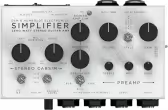
The Simplifier by DSM & Humboldt is a fully analog amp and cabinet simulator built into a compact stereo box. There’s no DSP here: preamp voicings, power amp tube types and cabinet responses are all shaped in real analog circuitry, the job most modern amp-in-a-box pedals hand off to software.
They’ve packed a lot into that footprint: a mono send and stereo return, line out, balanced output, separate cab and mic controls per channel, three preamp voicings and three power amp types, so left and right can run genuinely different tones instead of one mono amp doubled across two channels.
Controls
Reading the panel section by section: the left holds independent Mic and Cab controls per channel, so left and right can run different cab types (1x12, 2x12, 4x12) and mic positions at once. The center column is the power amp side, Presence and Resonance flanking a three-way Power Amp toggle for EL34, 6L6 and KT88 voicings. On the right, Volume and Gain sit beside the Preamp toggle, cycling through AC BRIT (AC30 style), AMERICAN (blackface Deluxe) and MS BRIT (Plexi style crunch), with Treble, Mid and Bass below forming the tone stack. A Spread control adds pseudo stereo imaging, and the widget flags mono summed, true stereo, or right channel only playback.
The Mic knobs act like low pass filters, one off center for directness, the other around noon for body. Resonance shapes the low-end resonance peak, kept low before it gets boomy; Presence handles high end clarity, backed off on gainier settings. The Power Amp toggle is a subtle midrange shift, the Cab switch the bigger move. In the demo above I’ve set up sweeps for Gain, both toggles, the Cab switch, Mic position, Resonance and Presence.
How It Sounds
British Chime, American Clean and British Gain map the three preamp voicings. British Chime pairs the AC BRIT preamp with presence high and resonance low, for a bright, chimey clean at moderate gain. American Clean leans on AMERICAN with the highest presence setting in the deck, for a familiar blackface sparkle. British Gain switches to MS BRIT with gain at 7, for vintage Plexi crunch rather than anything scooped.
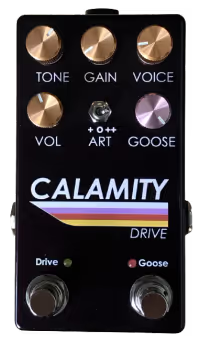
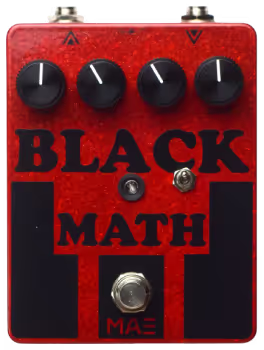
Spread Off and Spread On keep every other setting identical, isolating what the pseudo stereo imaging adds. With Overdrive and With Fuzz stack the Simplifier’s gain 6 setting with a Plain Speak Calamity Drive and a Mask Audio Black Math, showing it works as a pedal platform too. I don’t have much experience on real amps, so I can’t judge how closely each voicing tracks its namesake; the differences feel less drastic than on other modelers I’ve used, each preamp type nudging a few components rather than swapping the circuit. There’s enough here to sculpt a good tone regardless of label. I was genuinely impressed by what a fully analog circuit can do: this whole track, every guitar included, was recorded through the Simplifier.
Simplifier vs Iridium
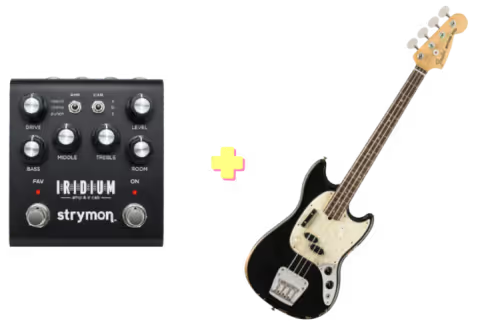
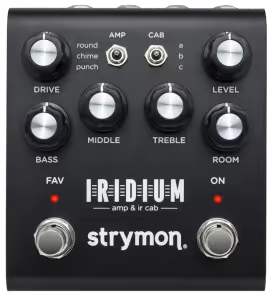
The Strymon Iridium is the modeler I reach for most, so it’s the natural comparison. The Iridium runs one digitally modeled amp voicing at a time, with a built in room reverb and a single shared stereo output. The Simplifier flips that: a fully analog dual channel rig where left and right carry different cab and mic settings at once, stacking three preamp voicings against three power amp tube types instead of three fixed packages, though it skips the Iridium’s reverb and one knob per amp simplicity. Grab a voicing and go, and the Iridium wins on speed; build a genuinely stereo, analog rig, and the Simplifier is the deeper tool.
Who It’s For
This is for players who want a fully analog, knob driven amp and cab rig for direct recording or silent practice, not scrolling a menu. The independent per channel controls make it a genuinely stereo tool, good for tracking two guitar parts side by side or widening one part with Spread engaged. It’s less suited to anyone after instant preset recall, MIDI control or built in reverb, or a tone dialed in within seconds.
Specs
Preamp: fully analog, three voicings, AC BRIT (AC30 style), AMERICAN (blackface Deluxe style) and MS BRIT (Plexi style)
Tone stack: configurable three band EQ (Treble, Mid, Bass)
Power amp simulation: Presence and Resonance controls plus a three way tube type selector (EL34, 6L6, KT88)
Cabinet simulation: independent per stereo channel, three cab styles (1x12, 2x12, 4x12) with adjustable mic position
Spread control for pseudo stereo imaging on recordings or headphones
Any preamp voicing can be paired with any power amp and cab combination
Signal Chain
Guitar
Fidelity Guitars Stellarosa Lite II with Lollar Firebird pickups (both pickups)
Simplifier
Overdubs
I used multiple tracks to fill the backing track with life. For all parts I used the Fidelity Stellarosa with different pickup settings and the Simplifier with different amp models. For cleaner parts, I used the Fenderish setting. For medium gain chimey stuff I used the Vox model. For lead and power chord overdubs, I used the Marshall sound-alike.