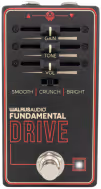
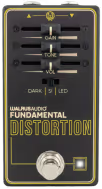
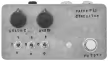
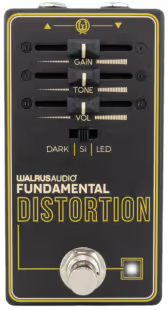
The Fundamental Distortion by Walrus Audio gives you three different RAT flavours in one compact box. No unnecessary extras: just Gain, Tone and Volume sliders, a three-way clipping mode switch, and that compressed, crunchy character the RAT circuit has been delivering since the late seventies.
Controls
The panel runs top to bottom: Gain, Tone, Vol, and then the mode switch. All three main controls are sliders rather than knobs, which is a deliberate design choice across the whole Fundamental series for fast, glanceable adjustments. Tone works as a post-distortion high-shelf filter: left of centre cuts the highs, right of centre opens them up. The mode switch selects the clipping diode configuration and is the biggest shaping tool on the pedal.
In the demo above I’ve set up sweeps for the Mode switch, Gain and Tone, so you can hear each one working in isolation.
How It Sounds
The three modes each pull a different character out of the same circuit. DARK uses asymmetric silicon clipping with an added high-frequency cut, which makes it feel open and dynamic. That’s the mode in the Easy Overdrive preset (Gain at 0, mode on DARK), and it shows how usable the low-gain end of this pedal is. SI is classic silicon hard clipping: compressed, crunchy, the sound most people picture when they think RAT. Classic Distortion sits at Gain 5 in SI mode and covers most of the standard distortion territory. LED uses LED hard clipping diodes for a more dynamic, punchy bite and runs hotter in output level than the other two. Punch & Crunch pushes Gain to 7 in LED mode and shows where the pedal bares its teeth.
The Gain sweep runs through the SI mode so you can hear the full range from near-clean to thick saturation. The Tone sweep runs in LED mode at full gain, where the high-shelf filter makes the most difference between a bright slice and a darker, more focused voice.
Fundamental Distortion vs Fundamental Drive
Both pedals sit in the same Fundamental series and share the same enclosure, slider layout and true bypass circuit. The distinction comes down to gain structure and clipping philosophy. The Fundamental Drive is built around soft-clipping silicon overdrive, with its highest-gain mode (CRUNCH) sitting on the edge of distortion. Its Tone control is a high-shelf cut only, rolling back brightness as you move it left. The Fundamental Distortion is a hard-clipping distortion throughout: all three modes use hard clipping diodes, which gives it more compression, more sustain and more aggressive saturation at equivalent Gain settings. The Distortion also offers the asymmetric DARK mode, which adds a high-frequency cut in the circuit itself rather than leaving that to the Tone slider. If you’re after touch-sensitive low-to-mid-gain overdrive, the Drive handles that lane. If you want the crunch and squash of a RAT-style distortion with three distinct clipping flavours on tap, the Distortion is the one.
Who It’s For
This pedal suits anyone who wants a no-fuss RAT-style distortion that doesn’t require a deep dive into menus or extra controls. The three modes give it enough range to cover classic rock crunch in SI mode, darker and more dynamic low-gain tones in DARK, and punchy high-output bite in LED. It works well in front of a clean amp or a lightly broken-up one, and the LED mode’s extra output makes it a capable clean boost when the Gain is rolled back. The slider format is practical on a board: everything’s readable at a glance and easy to set in low light.
If you want more tonal versatility (mid controls, more EQ shaping), the Fundamental Distortion keeps things deliberately minimal. It rewards players who know what they want from a RAT circuit and just need a reliable, quiet, well-built version of it.
Specs
Circuit: RAT-style hard clipping distortion
Controls: Gain, Tone (post-distortion high-shelf), Vol (sliders); 3-way mode switch
Clipping modes: DARK (asymmetric silicon with high-frequency cut), SI (classic silicon hard clipping), LED (LED hard clipping)
Bypass: True bypass with analog dry-through
Power: 9 V DC, 100 mA minimum; isolated power supply recommended
Dimensions: 4.33″ x 2.16″ x 1.61″
Designed and assembled in Oklahoma City, OK
Signal Chain
Fidelity Guitars Stellarosa Lite II with Lollar Firebird pickups (bridge pickup)