Fuzz Factory - ZVEX Effects
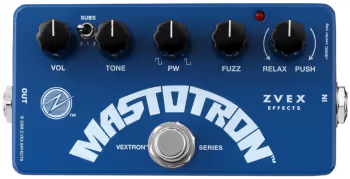
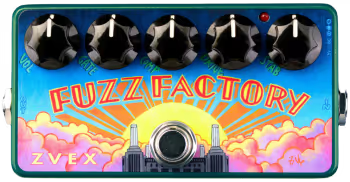
Fuzz Factory vs Mastotron puts two ZVEX pedals side by side that share a badge and almost nothing else. The Fuzz Factory is the famous germanium one with five knobs and a habit of self-oscillating; the Mastotron is the silicon sleeper with sub-bass weight and a pulse width knob. The widget above plays both through the same loop, the same chain and the same room at two settings, Velcro Fuzz and Alternative Sound.
The Fuzz Factory is an original ZVEX design built around two new old stock 1960s germanium transistors rather than a copy of a familiar vintage circuit, and its five controls all lean on each other: Volume, Gate, Comp, Drive and Stab.
Gate squelches hiss and buzz as it goes clockwise and opens into gated chop as it comes back. Comp adds attack rolled left and pinches the tone into a squashed voice near its ceiling. Drive behaves like gain on a normal fuzz, shifting feedback pitch and thickness as it climbs. Stab is the one that makes the pedal what it is: open the Gate and pull Stab back at the same time and the two fight over a decaying note, which is where the shortwave warble and self-oscillation live.
In the widget, Velcro Fuzz holds Gate at 6 with Drive maxed, which stays tidy. Alternative Sound drops Gate to 2 and lets it rip, so you get artifacts in the gaps between chords. The full Fuzz Factory demo sweeps Gate, Comp, Drive and Stab individually.

 More pedals, more fun
  Cure your GAS!
 Buy through these links and support Loopy Demos at no extra cost to you.
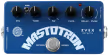
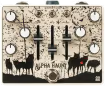
The Mastotron runs silicon instead of germanium and is voiced around a sub-heavy low end. Left to right: Volume, a three-position Subs toggle setting how much sub-bass sits under the fuzz, Tone for the top end, Pulse Width marked PW, the Fuzz depth knob, and Relax/Push, which is an input impedance control running from passive pickup territory toward line level.
Pulse Width is the character control. It reshapes the waveform of the distortion itself, and narrowing it is the clearest way to hear the circuit starve and gate. Relax/Push is the practical one, useful for taming hot pickups or running a bass or keyboard through the circuit.
The two widget settings use it well. Velcro Fuzz sits at PW 5 with Fuzz maxed and Subs on position 3, which is thick and low-end forward. Alternative Sound pulls PW down to 2 with Subs on 1, starving the waveform for a tighter, more gated read. There’s a DI-ish attack to it and a fast auto-swell that produces the velcro texture a little differently from everything else in the shootout. More in the full Mastotron demo.
 Treat yo' self Just one more pedal...
 Buy through these links and support Loopy Demos at no extra cost to you.
Get the Fuzz Factory if you want a creative tool that fights back. It’s the unpredictable one, capable of squealing into synth-like oscillation, and it rewards riding the controls in real time rather than setting them and forgetting them. If you already enjoy velcro gating and want to push past it into genuinely strange territory, this is the pedal that goes there.
Get the Mastotron if you want real bottom end and a fuzz that behaves itself. The sub-heavy voicing suits thick riffs and doom-adjacent tones, PW gives you control over how gated it gets without the whole circuit becoming unstable, and the impedance control makes it a sensible choice for reamping bass or synth lines through a fuzz. It’s the easier of the two to live with day to day.
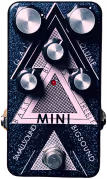

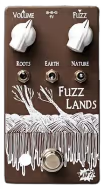
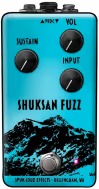
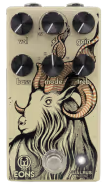
A shootout of 11 different velcro fuzz pedals. The Fairfield Circuitry Unpleasant Surprise, Walrus Audio Eons, Old Blood Noise Endeavors ...
Unpleasant Surprise or Fuzz Factory? Both reach gated, chaotic fuzz, but one gets there from two knobs and three toggles ...
Fuzz Bender or Fuzz Factory? Both reach velcro territory, but the Fuzz Bender gets there through an active EQ and ...

Mastotron or Woolly Mammoth for bass? Both are ZVEX fuzzes with real low end, but the Mammoth gates hard through ...