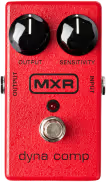
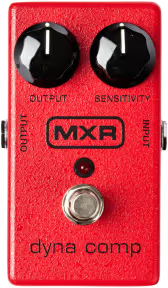
The Dyna Comp by MXR is an absolute classic among compressor pedals. Built around the CA3080 “metal can” integrated circuit, it’s been a staple on pedalboards for decades, and for good reason. This is not a transparent compressor and subtlety is not its strength. You get a Dyna Comp for the squishiness, that chunky feel, and the character it stamps on your tone.
Controls
Two knobs, left to right: Output and Sensitivity. Output sets your level after compression. Sensitivity controls how hard the compressor clamps down, from gentle evening-out on the low end to full, pillowy squash when cranked. That’s the whole interface, which is part of the appeal.
In the demo above I’ve set up sweeps for both knobs so you can hear exactly what each one does. The Output sweep runs with Sensitivity pinned at 10, so you can hear the full squash range at different volumes. The Sensitivity sweep runs with Output at 6, which lets you hear how the compression character changes from barely-there to full squeeze.
How It Sounds
The three named presets map the pedal’s range well. Subtle Compression (Output 7, Sensitivity 5) shows the more restrained side: notes still even out and sustain extends, but the squish stays in the background. Clean Squeeze (Output 7, Sensitivity 7) is where the character starts to show. Squash Boost (Output 8, Sensitivity 10) is the Dyna Comp fully committed: maximum compression with the output pushed up, that classic clicky attack, and sustain that holds notes well past where they’d naturally die.
I usually don’t use compressors just to even out sloppy playing. That becomes a crutch and doesn’t help you become a more controlled guitarist. Instead I like to use the Dyna Comp as a character effect. I love when the Sensitivity is cranked and the Output is boosted just enough so my amp constantly lives on the edge of breakup.
Dyna Comp vs King Comp
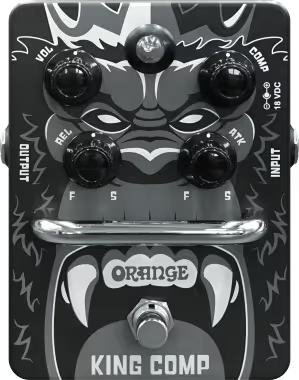
If the Orange King Comp is the compressor you use as infrastructure, the Dyna Comp is the one you use as an effect. The King Comp’s VCA circuit aims to stay invisible, tightening your signal without announcing itself. The Dyna Comp does the opposite: its CA3080 circuit has a personality you can hear from across the room, with audible squish, a slightly softened attack transient, and a sustain bloom that colors your tone on purpose. The King Comp also gives you independent Attack and Release controls to shape the compression envelope in both directions. The Dyna Comp gives you Sensitivity and Output only, so the envelope is baked into the circuit. Neither is wrong; they answer different questions about what a compressor should do.
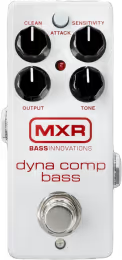
For bass players, the Dyna Comp Bass adds a Clean blend, a Tone control, and an Attack switch to that same CA3080 foundation, making it a more flexible tool for the low end.
Who It’s For
Always-on players who want their compressor to be part of the sound rather than behind it. Country and funk players chasing that percussive, clicky attack. Anyone who wants sustain that blooms without needing to touch a knob. The Dyna Comp also works as a clean boost when you push Output with Sensitivity low.
The honest caveat: if you want to dial in attack time, release time, or a blend knob to preserve your dry signal, this pedal won’t give you those options. Its two-knob simplicity is the feature and the limitation in equal measure.
Specs
Circuit: CA3080 “metal can” integrated circuit
Controls: Output, Sensitivity
Bypass: hardwire bypass
Power: 9 V DC, 3.3 mA (battery or adapter)
Max compression: 36 dB
Attack time: 5 ms, release time: 1 s
Signal Chain
Fidelity Guitars Stellarosa Lite II with Lollar Firebird pickups (both pickups)