SFT - Catalinbread
Catalinbread SFT vs Crazy Tube Circuits Falcon is a cross-shop between two JFET amp-in-a-box pedals chasing completely different amps: Ampeg on one side, Fender’s tweed and brownface era on the other. The widget above plays both through the same loop, the same chain and the same room at three gain settings, so you can hear where they part company before reading a word about it.
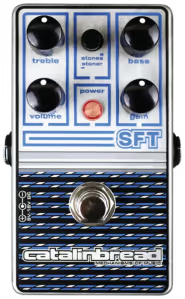
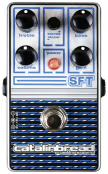
The SFT is Catalinbread’s JFET take on an Ampeg, and its tone stack is what makes it flexible. Treble and Bass are active Baxandall controls: noon is flat, past noon each knob actively boosts, below noon it cuts. That’s far more sculpting range than a passive tone control, and it’s why the SFT works as an always-on foundation across different guitars.
The rest of the panel is Volume and Gain flanking the status LED, a bypass stomp at the bottom, and a mode pushbutton sitting between the two EQ knobs. It toggles stones (green LED) and stoner (red), and rather than setting a fixed ceiling it shifts the headroom available to you. Stones keeps the gain range tighter and the attack punchier. Stoner opens the top of the dial into compressed, fuzz-leaning territory that still holds onto its pick definition. In the widget the Light setting sits in stones, while Medium and Hard both run stoner, Hard with Gain at 10. Worth knowing before you buy: the mode pushbutton isn’t footswitchable. There’s much more of it in the full SFT demo.
 'Cause why not?
  Treat yo' self
  Indulge a little
 Buy through these links and support Loopy Demos at no extra cost to you.
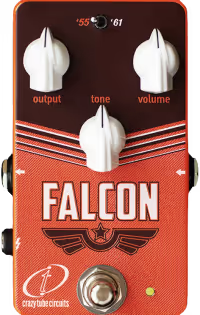
The Falcon is two amps in one enclosure: a 5E3 Tweed Deluxe from ’55 and a 6G2 Brownface Princeton from ’61. Crazy Tube Circuits didn’t just approximate the tone, they copied the behavior of the preamp, phase inverter and power amp of both designs with JFETs, and the different bias behavior of the two power sections comes through in the feel.
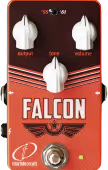
The labels take a minute to get used to. Volume is effectively the gain knob, roughly what you’d get from turning up an actual amp of that era, while Output sets the level leaving the pedal. Tone works the way it does on those amps: roll it below noon to smooth off the highs, push it past noon for upper frequencies and a touch of extra bite. The mode toggle sits centered between the two upper knobs.
’55 carries more gain, more low end and noticeably more sag, that chewiness the other preamps in the shootout don’t have. ’61 tightens all of it: less gain, a firmer bottom, a cleaner ceiling even with Volume maxed. In the widget the Light setting is ’61, Medium and Hard are both ’55. The full Falcon demo walks the Volume sweep in each mode.
 'Cause why not? Feeling pedalbored?
 Buy through these links and support Loopy Demos at no extra cost to you.
Get the SFT if you want Ampeg weight and an EQ you can actively sculpt. Desert rock, heavy blues and doom-adjacent players are the obvious fit, and of the two this is the one that gets genuinely gainy: at the top of stoner mode I’d file it under fuzz rather than overdrive. The Baxandall stack also makes it the easier always-on pedal if your board has to cope with more than one guitar or amp.
Get the Falcon if you’re after vintage Fender breakup for roots, Americana or blues, and you want the push and pull between a saggy tweed and a tighter brownface clean rather than one voice with two gain ceilings. Neither voicing has much gain on tap, so it takes drives in front of it well, and if you play off your guitar’s volume knob the ’55 side is the thing that sells it. For modern high gain, neither of these is the pedal.
A shootout of four different amp in a box pedals. The Catalinbread SFT, JHS Pedals Twin Twelve V2, Alexander Pedals ...
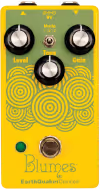
SFT or Blumes for bass? The SFT is an Ampeg-voiced amp-in-a-box with an active Baxandall EQ, the Blumes is a ...
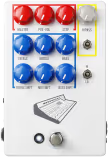
SFT vs Colour Box for bass: the Catalinbread SFT is a JFET Ampeg preamp with four knobs, the JHS Colour ...