Terror Stamp - Orange
I’ve demoed the whole current Terror family, and the question I keep getting is which Orange Terror is actually the right one to buy. The honest answer: they’re more different than the shared name suggests, and the right pick depends almost entirely on how much gain you want and where you’ll play. Here’s each one, with interactive demos so you can judge by ear.
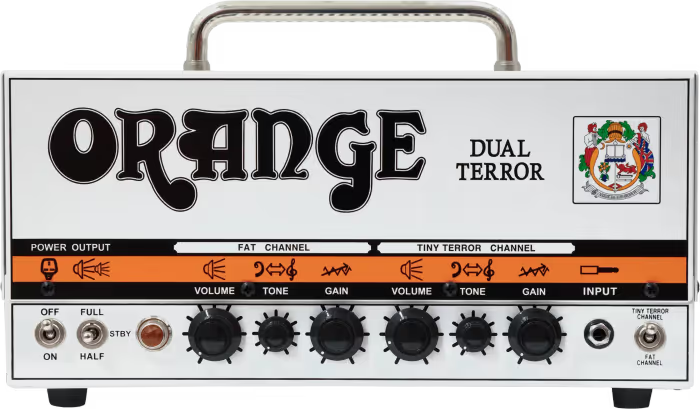
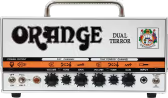
The Dual Terror is the Tiny Terror concept doubled: two independent channels in a lunchbox head, with switchable 30, 15 or 7 watts of EL84 power. The Tiny Terror channel is the raspy, focused one that gets gritty early in the gain sweep, while the Fat channel is rounder with more low-end body.
This is the most responsive amp of the bunch to your hands and guitar. With the gain backed off and volume up, you get surprisingly usable clean tones, and the Tiny Terror channel cleans up beautifully when you roll your guitar volume back. Crank it and you’re in proper British overdrive territory that sounds better than most pedals trying to fake the same thing.
The caveats: no reverb, no effects loop, and even 7 watts isn’t bedroom-quiet through an efficient cab. But if you want a rhythm tone and a lead tone without tap-dancing on a pedalboard, the two-channel layout covers the most tonal ground in the family. There’s more detail in the full demo.
 Feeling pedalbored?
  Buy now, brag later
  Your tone deserves this
 Buy through these links and support Loopy Demos at no extra cost to you.
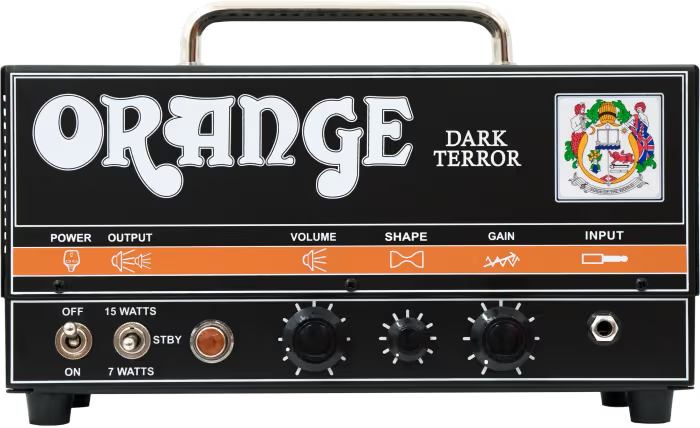
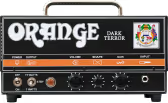
The Dark Terror is Orange’s highest-gain Terror, and it’s gloriously single-minded: one channel, three knobs, all valve, under six kilograms. Three ECC83s in the preamp feed a pair of EL84s, switchable between 15 and 7 watts.
What keeps it from being a one-trick metal machine is the Shape control. It doesn’t just adjust tone, it revoices the amp. Swept low, the mids push forward into that punchy Orange roar. Pushed to ten, the mids scoop out for tight, modern high-gain. One knob, two amp personalities. And there’s genuinely usable clean headroom before the preamp saturates, so it works as a pedal platform at lower gain too.
The 7-watt mode is more than a volume cut: it lets you push the EL84s into compression and sag at recording-friendly levels, which makes the amp feel looser under your fingers. No reverb, no EQ stack, no second channel, though. If saturation is your destination, this is the shortest route there. Hear the whole gain range in the full demo.
 Feeling pedalbored? One More won't hurt Shred responsibly
 Buy through these links and support Loopy Demos at no extra cost to you.
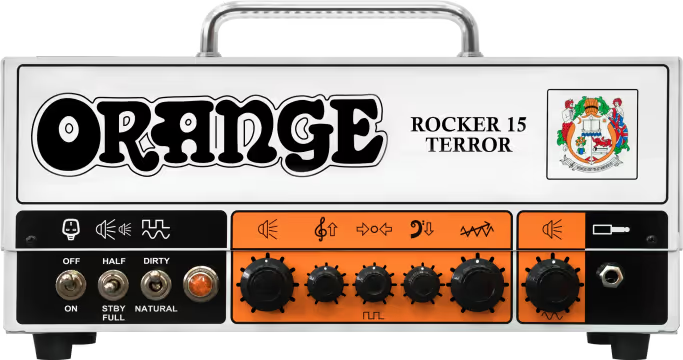
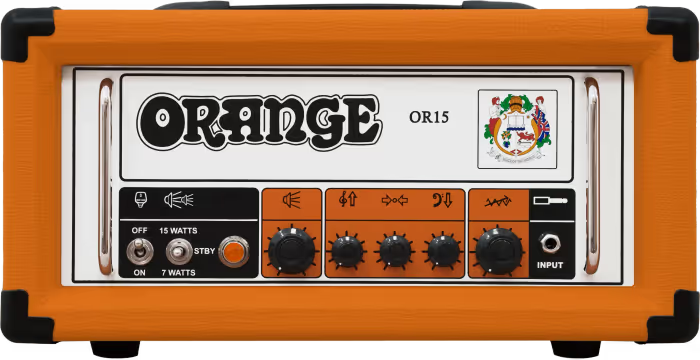
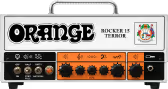
The Rocker 15 Terror is the practical one. It’s a dual-channel head where the Natural channel stays absolutely transparent (a single volume knob, nothing else) and the Dirty channel brings classic Orange bite with a proper three-band EQ. It also scales further down than any other Terror: 15, 7, 1 or 0.5 watts.
That Natural channel makes it the best pedal platform in the family, and the valve-buffered effects loop keeps time-based effects clean. On the Dirty side, the gain range runs from edge-of-breakup crunch to fat, compressed drive, with the bottom end filling out as you wind up the preamp.
I was pleasantly surprised how much tube character survives at half a watt. Unlike some amps that lose their soul when turned down, this one keeps its clarity and fullness across all power settings. Fair warning: 0.5 watts is still loud enough to annoy neighbours in a quiet building, and there’s no reverb or presence control. The full demo maps every knob.
 Shred responsibly Fuel your tone obsession 'Cause why not?
 Buy through these links and support Loopy Demos at no extra cost to you.
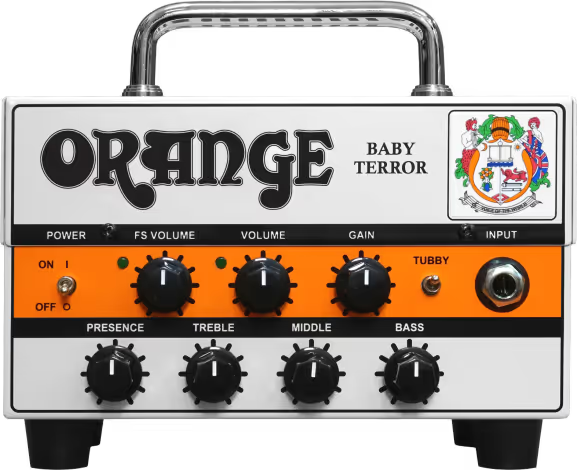
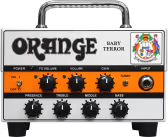
The Baby Terror is the odd one out, and it’s worth being upfront about why: there’s no valve in it. Every other head here runs a tube preamp, while the Baby Terror uses a single-ended Class A JFET front end, the same solid-state approach Orange uses across the Baby 100 series, voiced to mimic a tube preamp’s progressive clipping rather than to be one. Twenty watts, 1.5 kg, small enough to carry with one finger.
What you get for that trade is the most complete panel in the family. Gain, two volumes with the second footswitchable for lead boosts, a full three-band EQ plus a dedicated Presence, and the Tubby switch, which is a low-end contour that thickens the bottom end and earns its keep with the gain rolled back. Round the back sit a series effects loop, a balanced XLR line out with ground lift, and both 8 and 16 ohm speaker outputs.
The gain range genuinely reaches modern territory, and at the top end the Middle knob does most of the separating: down with the treble up for the scooped, palm-muted version, wound up for that mid-forward Orange honk. Backed off, it’s a clean and crunch platform for drive pedals.
The caveats: no reverb, no second channel, no cab-sim or headphone output, and no power scaling. Being solid-state, it won’t meet you halfway with valve sag when you ride the guitar volume the way the Dark Terror or Rocker 15 will. The full demo walks every knob.
 Snag one here Upgrade your noise Just one more pedal...
 Buy through these links and support Loopy Demos at no extra cost to you.
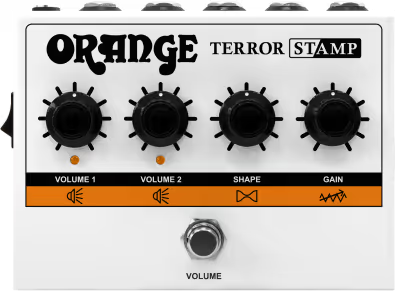
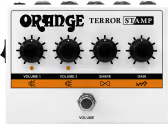
The Terror Stamp shrinks the concept to a pedalboard slot: a real 12AX7 tube preamp in front of a 20-watt solid-state power section, in a stomp enclosure weighing 380 grams. Two footswitchable volumes give you a built-in rhythm-to-lead jump, and a single Shape knob handles EQ duties.
Twenty watts is rehearsal or small-gig loud, not bedroom practice. Cleans are decent, but this thing shines in crunch territory: loose, grinding, and musical, with the warmth that a real tube stage buys you. It responds to picking attack like a proper amp because, functionally, it is one.
It’s also the most flexible utility box here. The cab-sim output covers headphones and direct recording, and the FX return doubles as a standalone power amp input for modelers. The trade-offs: it wants to be driven (pristine clean headroom isn’t its thing), and one Shape knob gives you less EQ resolution than a full stack. Details in the full demo.
 Tone quest ends here Fuel your tone obsession Indulge a little
 Buy through these links and support Loopy Demos at no extra cost to you.
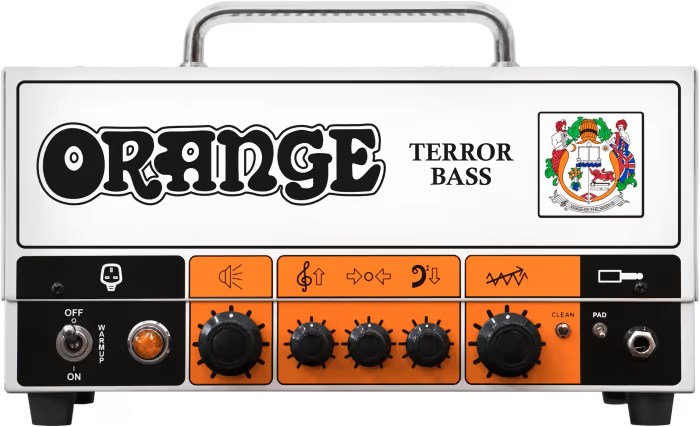
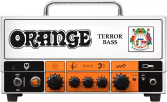
The Terror Bass takes the same lunchbox idea to the low end: a real valve preamp (ECC83 plus 12AT7) in front of a 500-watt Class D power section, at around four and a half kilograms. Rolled back, the Gain stays clean and defined; pushed up, you get that gradual midrange saturation and organic compression that makes Orange bass amps distinctive.
The Clean switch tightens the low end at volume, the Pad switch handles active basses, and the balanced DI makes it a solid straight-to-desk option. If you want a bass head with a voice of its own and some give under your fingers, this is the Terror for you. Full breakdown in the full demo, and if you’re weighing it against the rest of the bass range rather than the guitar Terrors, that’s the Orange bass amp guide.
 Upgrade your noise Fill that empty spot Your tone deserves this
 Buy through these links and support Loopy Demos at no extra cost to you.
Whichever way you lean, flip through the presets in the demos above first. The differences between these heads are easier to hear than to describe.