Bass Butler - Orange
I’ve now demoed six Orange bass products, and the question that keeps coming up is which Orange bass amp is actually the right one to buy. They’re spread much further apart than the shared badge suggests: one of them has no gain stage at all, one weighs as much as a bag of cement, and one isn’t an amp. Here’s each, in the order you’d meet them, with interactive demos so you can judge by ear.
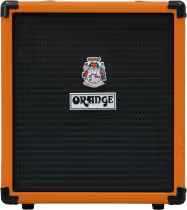
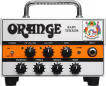
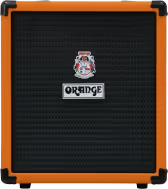
The Crush Bass 25 is the practice end of the range: 25 watts through an 8″ driver in a ported rear-loaded cabinet, with a fully analogue signal path, a chromatic tuner and an aux input. At 8.3 kg it genuinely is grab-and-go.
The control that earns its keep is the parametric mid. Most practice combos hand you a fixed Middle knob, but here the Freq control sweeps the centre frequency that Middle acts on, so the same amp goes scooped and chest-thumping with both pulled back, or forward and attack-focused with both pushed up. Underneath, the voice is warm and rounded, with the low end doing most of the work.
The standout for home use is the CabSim headphone output. I recorded the demo straight from the Phones jack, no DI or interface, and it holds up. The honest limits: 25 watts through an 8″ speaker won’t compete with a loud drummer, and there’s no overdrive circuit and no effects loop. The full demo walks every knob.
 Feeling pedalbored?
  Shred responsibly
  More pedals, more fun
 Buy through these links and support Loopy Demos at no extra cost to you.
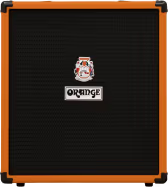
The Crush Bass 50 doubles the wattage and steps up to a 12″ ported cabinet, and the bigger box buys real low-end extension rather than just volume. It keeps the analogue path, the parametric mid, the tuner and the CabSim phones out, and adds a buffered effects loop.
What changes the amp’s purpose is the overdrive section: Gain plus a Blend control, switchable in and out with the optional footswitch. Gain runs from subtle grit to full growl, and Blend mixes that driven signal back against your clean tone so the fundamental stays intact underneath. Scooped Crunch shows it at modest gain with Blend up at 7; Basstortion cranks Gain to 8 with the Freq swept low for thick, heavy drive.
The caveat is that it isn’t the loudest 50 watts around. For practice, recording and smaller gigs it covers the ground; for a loud band on a big stage you’ll want more. Details in the full demo.
 Shred responsibly Feeling pedalbored? Impulse buy here
 Buy through these links and support Loopy Demos at no extra cost to you.
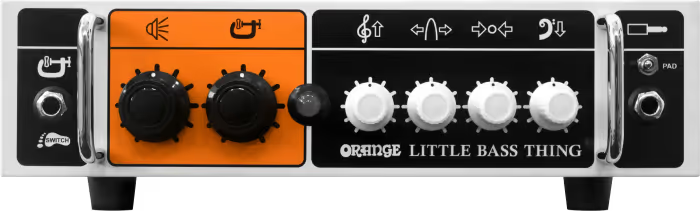
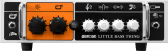
The Little Bass Thing is where the range stops being about Orange character. It’s 500 watts of Class D power in a 3 kg head with an all-analogue front end, and what surprised me is how neutral it is: there’s no gain control, no saturation, nothing but headroom.
That makes it the pedal platform of the family. The Neutral preset with everything at noon confirms how flat it runs at unity, and dirt pedals into it sound exactly like themselves, which is the whole reason to pick one. The shaping happens in the EQ instead: Hi and Bass are shelving controls, while Mid Band sets the level of the parametric mid and Mid Frequency picks its target, so a scooped slap tone and a mid-forward rock sound sit a few turns apart. The Comp knob runs a Class A VCA compressor you can also engage by footswitch.
There’s a balanced XLR DI, a series effects loop and a headphone output for quiet practice. The honest caveat: if you want valve warmth or built-in drive, this amp will never give it to you. It’s clean by design. If that’s the plan, pair it with something from the bass overdrive comparison. More in the full demo.
 Upgrade your noise Cure your GAS! 'Cause why not?
 Buy through these links and support Loopy Demos at no extra cost to you.
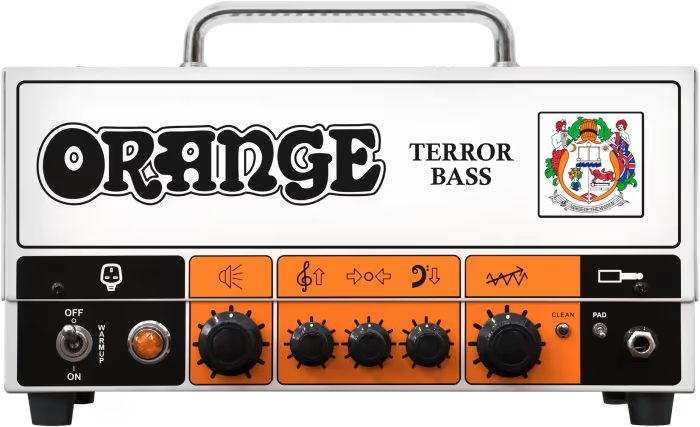
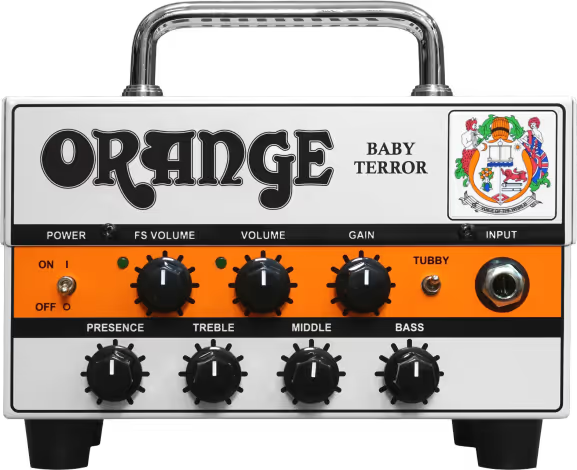
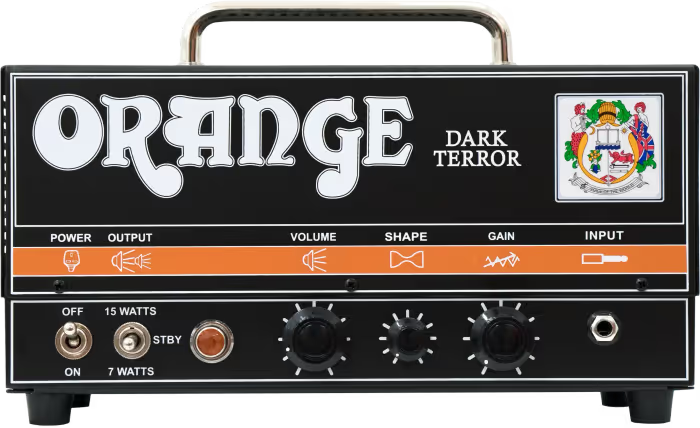
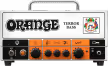
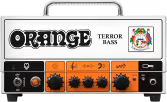
The Terror Bass is the same 500-watt Class D power section with a real valve preamp in front of it: an ECC83 and a 12AT7, in a lunchbox head at 4.65 kg. It’s the direct answer to the Little Bass Thing rather than a step up from it.
The Gain control is where the character lives. Rolled back it stays clean and defined; pushed up you get the midrange warmth, gradual saturation and organic compression that make Orange bass amps distinctive. Sweet Growl is the amp’s natural voice, fat underneath with just enough hair on the notes. Tight Crunch takes Gain to 10 with the Mids at 9 and gets genuinely aggressive.
The Clean switch tightens the low end at volume (Dimed Clean shows how much it reins things in with Gain all the way up), the Pad switch handles hot active basses, and the balanced DI with ground lift makes it a solid straight-to-desk rig. No onboard compression, no headphone output. It also appears in the Terror family guide if you’re weighing it against the guitar Terrors. Full breakdown in the full demo.
 Fill that empty spot Impulse buy here Cure your GAS!
 Buy through these links and support Loopy Demos at no extra cost to you.
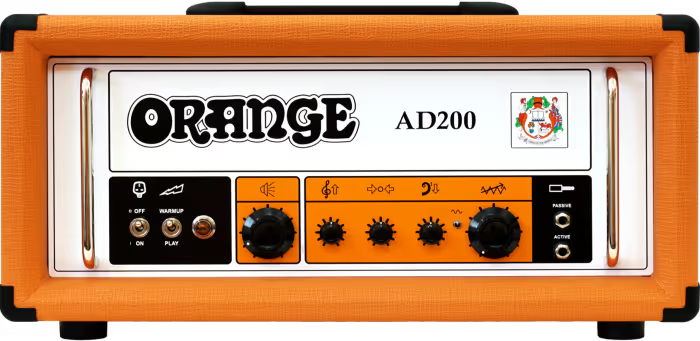
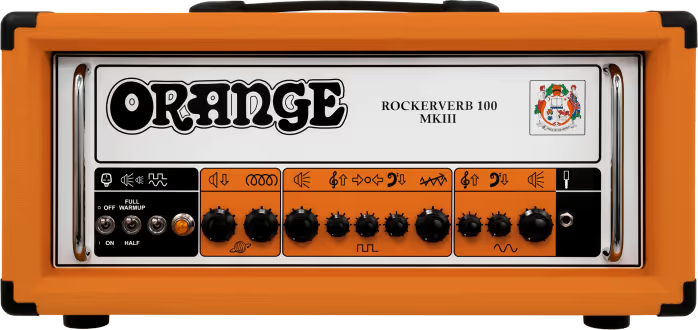
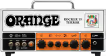
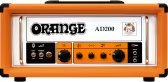
The AD200 is the flagship, and it’s all valve from end to end: two ECC83s and an ECC81 feeding four KT88s for 200 watts, through the shortest possible analogue signal path. Five controls, two inputs, and that’s the whole amp.
What that buys you is response. Dig in and you get natural compression and harmonic saturation; play softly and it cleans up with real clarity. Smooth Clean, with the gain low and the Clean switch on, shows how much headroom the KT88s have on tap. Vintage Tube is where the amp starts to breathe, and Hard Rock cranks the gain with the Clean switch off for something aggressive and cutting that still has weight underneath. Running the Clean Gain and Dirty Gain sweeps back to back is the clearest way to hear what the Clean switch actually does.
The caveats are the obvious ones: 26 kg is a load-in, not a gig bag, and there’s no built-in DI or effects loop, so those are external problems. Volume-knob players get the most out of it. The full demo covers the range.
 Fill that empty spot Snag one here More pedals, more fun
 Buy through these links and support Loopy Demos at no extra cost to you.
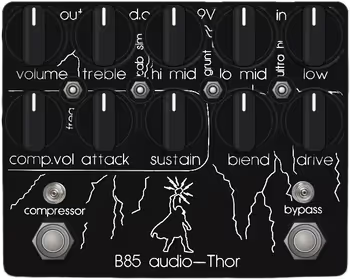
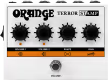
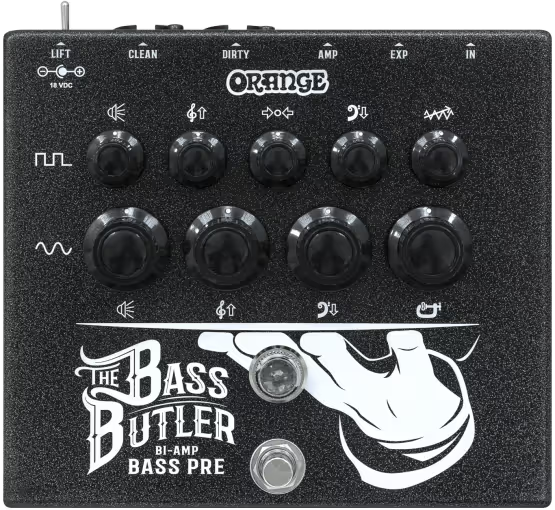
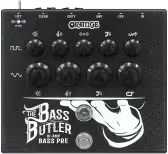
The Bass Butler is the answer if you’d rather not carry an amp at all. It’s a bi-amp preamp pedal running two separate chains in parallel: a clean, full-frequency bass channel and a gain-laden guitar channel, exactly like a real bi-amp rig, on 18V for headroom.
The clean side keeps it simple with Volume, High, Low and a Comp knob for studio-style compression. The guitar channel gets five controls and covers a lot of ground: the Gain sweep runs from musical crunch that still sits in a mix up to modern high-gain with serious bite. A centre stomp blends the dirty channel in and out, and the Amp Out Mix preset shows the two sides complementing rather than fighting.
Both channels have their own balanced XLR with dedicated cab simulation, plus a blended jack and a dry output for reamping, which makes it a complete fly rig and studio DI in one box. The caveats: it takes roughly three Boss-sized slots, and the 18V requirement rules out most daisy chains. See the full demo.
 Cure your GAS! Fill that empty spot Buy now, brag later
 Buy through these links and support Loopy Demos at no extra cost to you.
Either way, flip through the presets in the demos above before you decide. The gap between a valve preamp and a clean platform is much easier to hear than to read about.