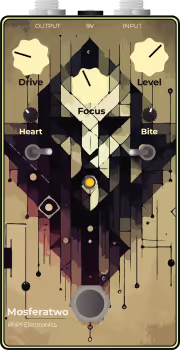
Mosferatwo - RhPf Electronics
The Tri-Hormonic Phalanx by RhPf Electronics takes a methodical approach to tone shaping with independent control over three frequency bands: lows, mids, and highs. Each band has its own MOSFET-driven gain stage and level control, designed to sit first in your signal chain where it sculpts your fundamental tone before hitting other effects. RhPf leans into the hormone theme with the band names too, IGF-1 for the lows, GH for the mids, and ACTH for the highs, which is a fitting bit of branding for a “tri-hormonic” pedal.
What I appreciate about the Phalanx is how it enhances rather than overwhelms. You can dial in exactly the tonal balance you want, more clarity in the highs, warmth in the lows, or midrange punch that cuts through a mix, and the MOSFET design keeps it musical whether you’re going for subtle enhancement or pushing harder for harmonic excitement. This isn’t a pedal that screams for attention, it’s more like having a good preamp built into your guitar, with enough output to drive whatever comes next and make it a solid foundation for stacking with overdrives and distortions.
The six knobs form three bands laid out in columns across the panel: IGF-1 for the lows on the left, GH for the mids in the center, and ACTH for the highs on the right. Each band pairs a larger Drive knob with a smaller Level knob. IGF-1’s Drive sits at top left with its Level just below it, ACTH’s Drive sits at top right with its Level below that, and GH’s Drive anchors the bottom center with its Level tucked just above. Each band runs its own MOSFET gain stage, so a Drive knob adds harmonic push and grit to that frequency range while its matching Level knob sets how loud that band sits in the overall blend. A single footswitch handles true bypass, with a white LED confirming when the Phalanx is engaged.
In the demo above I’ve set up sweeps for all six knobs (IGF-1 Drive and Level, GH Drive and Level, and ACTH Drive and Level), so you can hear exactly what each band contributes on its own before you start blending them together.
Amp Tickler is the demo’s baseline: a fairly even push across all three bands that nudges an amp into breakup without changing its character. Woolly Boost leans harder on IGF-1 for extra low-end weight and warmth. Fat Treble Boost pulls the low band down while pushing GH and ACTH, so the mids and highs come forward for a brighter, more cutting voice without losing thickness. Drive Stack shows the Phalanx doing what it’s built for: sitting after an RhPf Electronics Mosferatwo drive pedal and shaping the stacked signal with the mids pushed hardest, the foundation-then-color chain the pedal is designed around.
The Stone Deaf FX QBoost is a parametric booster: one sweepable band that you aim at a specific frequency for a QOTSA-style mid push. The Phalanx takes the opposite approach, giving you three fixed-ish bands you dial in simultaneously rather than one moving target. Where the QBoost is about finding and hitting one frequency hard, the Phalanx is about balancing lows, mids and highs against each other at the same time, which makes it less of a single-trick boost and more of a tone-shaping stage you can leave dialed in as your baseline sound.
The Phalanx suits players who think of tone shaping as part of their rig rather than a one-off effect, especially anyone running a pedalboard where it sits first and sets the tonal foundation for everything downstream. It’s well suited to stacking ahead of overdrives and distortions, shaping the input signal before gain gets added. If you just want a simple volume boost for solos, the tri-band control here is more than you need. If you want a preamp-style tool to sculpt your core tone before anything else touches it, this is built for exactly that.
Get detailed specs on RhPf Electronics' website

<div data-loopydemos="rhpf-electronics-tri-hormonic-phalanx" data-title="RhPf Electronics Tri-Hormonic Phalanx | Loopy Demos" data-width="400" data-height="610"></div>
<script src="https://loopydemos.com/embed.js" async></script>To embed this demo on your website, copy & paste the code above or customize your demo widget